
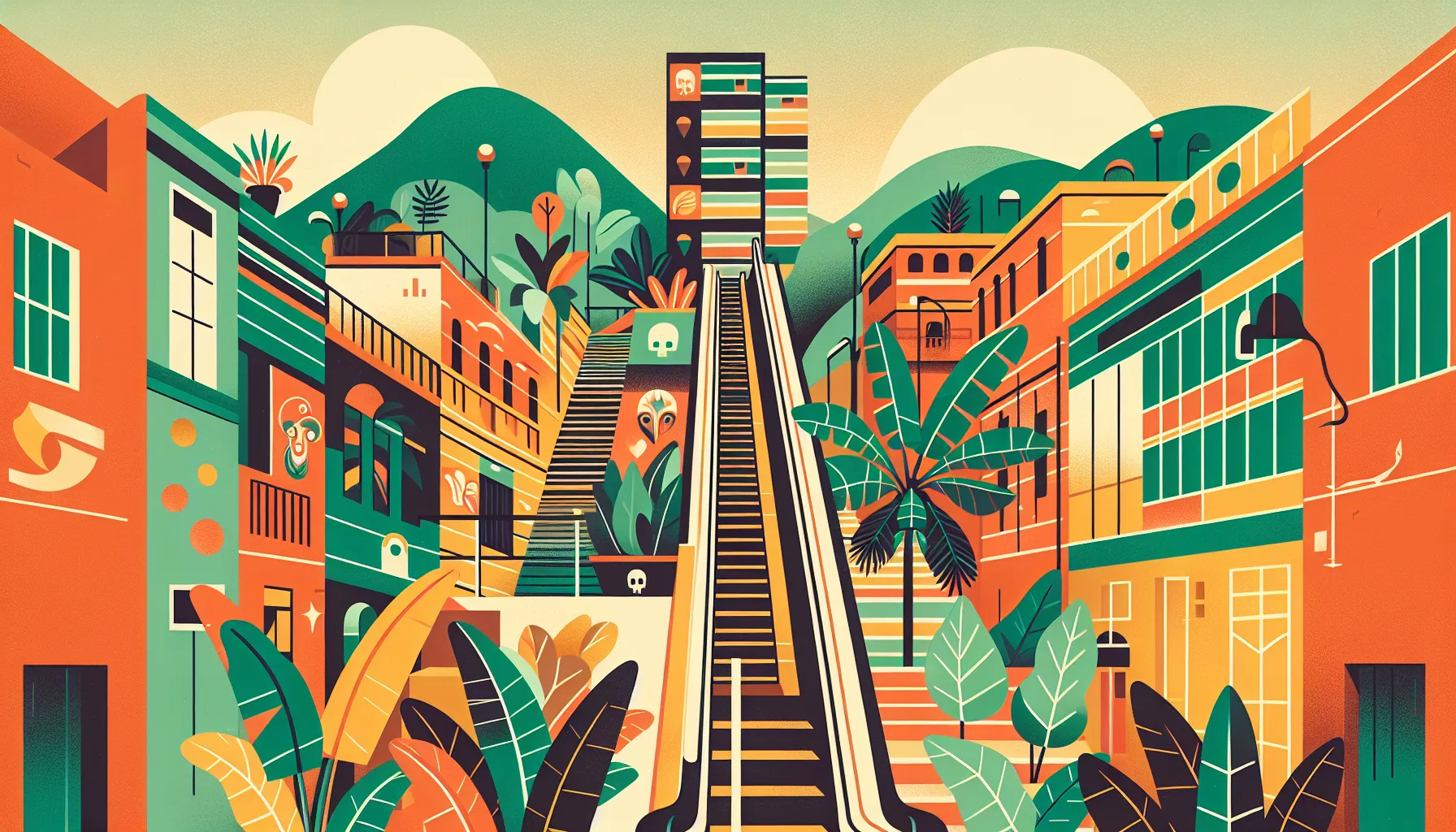
Comuna 13: From Conflict Zone to Open-Air Art Gallery
No visit to Medellín is complete without walking through Comuna 13 (officially San Javier). Today it’s one of the most Instagram-photographed neighborhoods in all of South America — a kaleidoscope of murals, street performers, hip-hop dancers, and souvenir shops cascading down a steep hillside. But the story behind the colors is anything but superficial.
The Darkest Chapter
In the 1990s and early 2000s, Comuna 13 was a strategic corridor for armed groups — guerrillas, paramilitaries, and drug traffickers all fought for control of the hillside territory that connects the Aburrá Valley to the Pacific coast. Residents were caught in the crossfire.
In 2002, the Colombian military launched Operation Orion, a controversial urban military operation involving helicopters, armored vehicles, and hundreds of soldiers in civilian neighborhoods. The operation succeeded in dislodging guerrilla groups, but at a devastating human cost. Scholars from the Universidad de Antioquia have documented forced disappearances, extrajudicial actions, and deep community trauma that persisted for years.
The Escalators That Changed Everything
In 2011, the city installed a set of six outdoor public escalators covering 384 meters of steep hillside — the equivalent of a 28-story building. Before the escalators, residents had to climb roughly 350 steps just to get home. For elderly residents, parents with small children, and anyone carrying groceries, the daily climb was physically punishing and socially isolating.
The escalators cut a 35-minute climb to about 6 minutes. But their significance went beyond convenience. Research from the Colegio Mayor de Antioquia documents how the escalators triggered a transformation of dwelling and productive dynamics — new shops, cafes, and micro-businesses opened along the escalator corridors almost immediately.
Graffiti as Memory
The most visible transformation came from the community itself. Young artists began painting the walls of Comuna 13 with murals that told the neighborhood’s story — not the sanitized version, but the real one. Images of Operación Orion, forced displacement, lost family members, and resilience cover every surface.
A study published in SciELO Colombia analyzed the Graffitour — the community-managed walking tour through the murals — and found that it functions as a genuine cultural heritage intervention, not just a tourist attraction. The tours are run by local residents who lived through the violence, and the narrative they offer is unflinching.
Academic research from the Universidad Autónoma de Querétaro frames the street art as a “device for social change” — the murals give the community ownership over its own story, countering both the government’s triumphalist narrative and outsiders’ tendency to reduce Comuna 13 to its violent past.
Hip-Hop and the Youth Movement
Hip-hop has been central to Comuna 13’s cultural identity since the 1990s, when young people used rap as a form of expression and resistance during the worst years of violence. Today, breakdancing crews perform daily along the escalator route, and several recording studios operate in the neighborhood.
Research from Academia.edu describes how youth use graffiti and hip-hop to understand and distance themselves from violence — creating a new identity for the barrio that neither denies its history nor is defined by it.
The Tourism Question
Comuna 13 now receives an estimated 4,000 to 8,000 visitors per day during peak season. A 2023 thesis from the Universidad Politécnica de Madrid analyzes the neighborhood’s transformation “from informal settlement to tourist destination,” evaluating the spatial, economic, and social impacts — including the unforeseen consequences.
A separate study from the Universidad de Antioquia critically examines how tourism management has turned what were once stigmatized sectors into global tourist destinations, asking whose interests are truly served. Gentrification pressures are real: longtime residents face rising rents as tourist-oriented businesses move in.
The community has responded with its own governance structures. Local tour guide associations regulate who can lead tours (only residents of the neighborhood), and a portion of tour proceeds funds community projects.
Visiting Comuna 13
The best way to experience Comuna 13 is through a community-led graffiti tour. These typically last 2–3 hours and include:
- The outdoor escalators and surrounding murals
- Live hip-hop and breakdancing performances
- Explanations of each major mural’s significance
- Stops at local snack vendors and artisan shops
- Historical context from guides who grew up in the neighborhood
Getting there: Take Metro Line B to San Javier station, then walk or take a short taxi ride to the escalators. Most guided tours start near the base of the escalators.
When to go: Morning visits (before 11 AM) are less crowded. The neighborhood is generally safe during daylight hours, but stick to the main escalator route and go with a guide for the fullest experience.
What to know: This is a living neighborhood, not a theme park. Residents are going about their daily lives. Ask before photographing people, buy from local vendors when you can, and tip your guide — this is a community that has earned every bit of the prosperity tourism brings.
References:
-
Sáenz de Miera García, I. (2023). “La comuna 13: de asentamiento marginal a enclave turístico.” Bachelor’s Thesis, Universidad Politécnica de Madrid. UPM
-
(2021). “Comuna 13, estudio de caso: la historia relatada en las paredes como estrategia de un emprendimiento social.” SciELO Colombia. SciELO
-
“Metamorfosis del habitar: dinámicas productivas en las escaleras eléctricas de la comuna 13.” Colegio Mayor de Antioquia. Issuu
-
“The Graffitour of the 13: an aesthetic, political and historical trajectory through Medellín.” Academia.edu
-
“El arte callejero como dispositivo de cambio social: el caso de la Comuna 13.” HArtes, Universidad Autónoma de Querétaro. HArtes
-
(~2024). “Escalera al cielo: procesos de inserción de la Comuna 13 a las dinámicas de turismo global.” Universidad de Antioquia. UdeA
-
“Collective memory and governance through graffiti.” ALACIP Congress. ALACIP